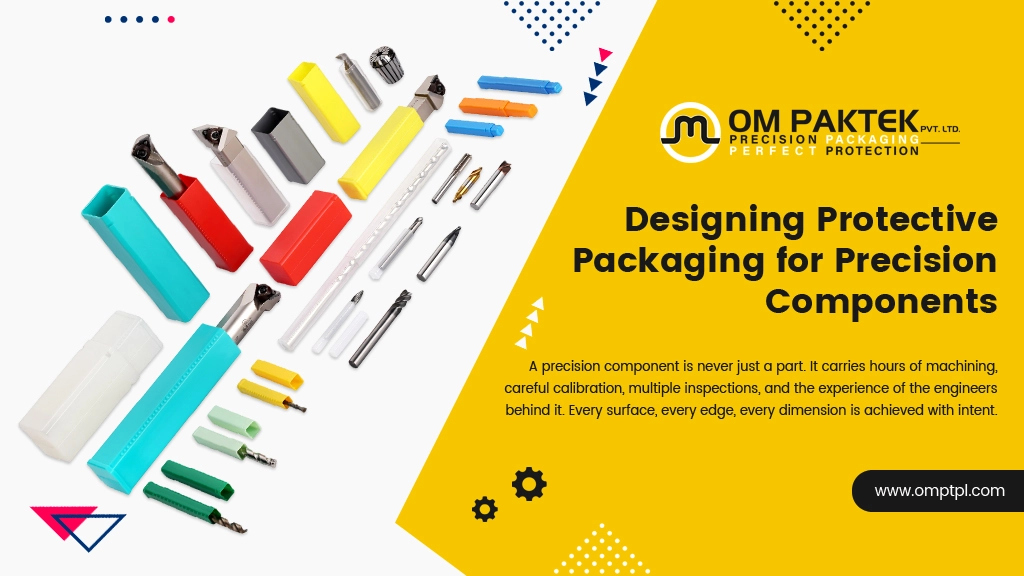
Designing Protective Packaging for Precision Components
A precision component is never just a part. It carries hours of machining, careful calibration, multiple inspections, and the experience of the engineers behind it. Every surface, every edge, every dimension is achieved with intent.
And yet, the biggest risk to that precision doesn’t usually come during manufacturing.
It comes after.
Once the component leaves the machine, it starts moving — from one station to another, from inspection to storage, from storage to dispatch. In this movement, even a slight impact or unintended surface contact can affect what was created so carefully.
This is where protective packaging for precision components becomes critical.
Not just as something used for dispatch, but as something that exists throughout the entire process. The way a component is placed, picked, stored, or moved directly influences precision component handling, and that is where consistency is either maintained or lost.
If the component is precise… why is the handling still generic?
Most packaging is still treated as something standard — something that should work across multiple parts.
But precision components are not standard.
Each one has its own geometry, its own delicate areas, and its own way of being handled. This is where industrial packaging design starts becoming important, along with the need for better component protection solutions that match the actual requirements of the part.
When packaging does not reflect these realities, issues begin to appear — sometimes immediately, sometimes over time.
For example, it often leads to:
- edge damage on critical surfaces
- minor abrasions that affect finish
- inconsistent handling across operators
These are small issues individually, but over time, they add up.
What changes when packaging is designed with the component in mind?
A more practical way to approach this is simple — instead of trying to fit the component into available packaging, the packaging should be built around the component.
That shift changes everything.
It brings attention to where the part should rest, what should support it, and what should be avoided. It also reflects how components are actually handled on the shopfloor, not just how they are designed.
Small decisions start to matter more. How the cavity is shaped. How much space is allowed. How the component sits.
Individually, these may seem minor. But together, they improve stability, reduce movement, and create more reliable OEM packaging solutions in real manufacturing environments.
This approach also aligns with the needs of precision engineering packaging, where even small inconsistencies can have larger consequences.
Where material actually fits into this
Material plays its role as well, but not in isolation.
Choosing between virgin, recycled, or compostable materials only makes difference when you understand how the packaging will actually be used. Load, reuse, and handling conditions decide what works — not just the category itself.
When packaging is thought through this way, it does more than just protect the part. It makes handling easier, reduces small mistakes, and brings consistency to everyday operations.
And over time, that consistency makes a real difference.
That is exactly why design matters.
Because once you start looking at packaging from the perspective of the component — how it is used, how it is handled, and what it needs to remain protected — the approach naturally changes.
In the end, what is built with precision
should be handled with the same level of intent.